

 Employer Registration

- LocationBahamas, The Bahamas
- SalaryDepends on Experience
- Vessel Length111' to 144' (34 to 44 meters)
- Vessel FlagUnited States of America
Find your next yacht crew role in Caribbean just a few clicks and apply to as many as you want. Caribbean is better known as a major talent incubator and training hub than for luxury cruising. However, the ecotourism and expedition cruising industry is recently gaining immense prominence among private yacht owners who are constantly looking to explore remote destinations.
Meridian connects you directly with these owners, captains, and hiring managers. Explore hundreds of verified yacht crew job listings, apply easily via our One-Click Apply feature, and let your next yacht crew role find you.


Caribbean's yachting market is big and diverse. The top hiring ports handle more vessel traffic than almost anywhere else in the world. Besides, the traffic follows a fairly predictable pattern each year. So, if you are in the right marina at the right time, there are more open positions than the number of qualified crew to fill them. This gap could work in your favour. Yacht types here range from high-tip charter boats to stable private yachts with long-term contracts and annual bonuses. Engineering and ETO roles are the hardest to fill, and salaries for these positions reflect the shortage.
Working on a yacht in Caribbean pays well, and the full picture is even better than the salary alone suggests. Your employer covers your accommodation, food, and travel costs. These are expenses that often take up nearly half of what a land-based worker earns. That makes your monthly pay stretch much further than it would in a regular job. Charter crew earn extra tip income on top of their base salary. On a yacht with wealthy guests and a full booking schedule, tips can push your total monthly earnings 25 to 35% higher than your base rate. If you work in engineering or as an ETO (Electronic Technical Officer), you are in an even stronger position. There is a well-known shortage of qualified marine engineers globally. Employers compete to hire qualified candidates, and that keeps salaries in these roles consistently high.
Being visible on several channels is the key to landing yacht jobs in Caribbean. Employers who are actively hiring can view your profile on digital recruitment portals such as Meridian, which functions as your digital CV. Additionally, you can meet people by staying in crew houses and going to networking events. By placing yourself close to the area's primary recruiting marinas during seasons of high recruitment or industry events when possible, and personally introducing yourself to dockside crew coordinators, you can increase your chances of getting hired offline.
Even though yacht work in Caribbean is scattered throughout several nations, you can find most opportunities in a few key maritime markets. The ideal country would have deep-water marina facilities, thriving private and charter fleet industries, well-established networks of crewing agencies, and a seasonal pattern that sees large numbers of foreign yachts passing through its waterways. You have the best chance of landing a job if you focus on these areas first and look for jobs during their busiest hiring seasons.
Any paid yacht position in Caribbean requires two certifications. First, a current ENG1 Medical Certificate from an authorised examiner. Second, STCW Basic Safety Training, a five-day course covering firefighting, first aid, and sea survival. These are basically the uniform admission standards worldwide, and no genuine recruiter will hire yacht employees without these two documents. Besides these, you may need a relevant deck license (RYA/MCA or USCG, depending on the flag state). Similarly, engine room professionals may need an engineering certificate. Meanwhile, interior and galley roles may require you to have acknowledged and accepted hospitality or culinary qualifications.
While the concept of "season" varies greatly depending on which region of Caribbean you are targeting, the yacht jobs market throughout Caribbean is very seasonal. While some places have overlapping cycles that maintain significant crew demand for eight or more months, others only have one major hiring time per year. A crew member who is willing to follow the fleet can string together back-to-back contracts across various sub-regions. This method effectively creates a year-round income from what would otherwise seem to be a collection of seasonal roles. This is the key insight for job seekers regarding Caribbean's seasonal diversity.
The average pay for yacht crew roles in Caribbean aligns with global industry standards. As a result, your earnings will be similar to what crew members earn in other major yachting regions. This means your income is stable and predictable, whether you are working in the Mediterranean or the Caribbean. The most notable variable is tip income, which only applies to charter yachts. On a busy charter yacht with a full schedule, tips can add 15-30% to your total monthly earnings. Engineers and technical officers earn above the standard crew rate across Caribbean because there is a shortage of qualified people in these roles. That shortage keeps their salaries high.
In Caribbean, most hiring happens in a few popular ports that have created a strong reputation over the years. Some of the characteristics of these spots are good docking for large yachts, shops that supply boats and tools, and services like crew houses and training schools. If you are looking for yacht work in Caribbean, one of these well-known ports should be your first stop.
Getting a yacht job in Caribbean starts with having the right paperwork. Check that your STCW and ENG1 are still valid. If you need a visa to work in your target area, sort that out early too. Then sign up on Meridian and apply directly to verified employers across the continent. When you write your application, focus on what matters most for that specific boat — deck crew should mention the size of vessels they have worked on; interior crew should highlight their service background and any languages they speak. Using Meridian, an agency, and dock networking together gives you the best chance of success.
Meridian has helped thousands of yacht owners, management companies, and recruiters find exceptional captains and crew for amazing yacht vacancies since Crew4Yachts was founded in 2006, continuing after its acquisition in 2020.
Beyond this, here are other reasons why you should use Meridian to jump-start your yacht career:
Posting job vacancies or searching our platform for experienced crew takes just a few minutes.
Join for free in under two minutes. Instantly get discovered by hundreds of employers hiring yacht crew, receive job alerts tailored to you, and apply for opportunities around the world.

Upload your CV to create your account. If you'd like, you can also add qualifications and references.
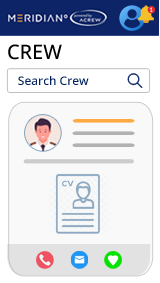
Employers can find and contact you directly using keyword search, just like Google.

Apply through our job alert emails or directly from our website.